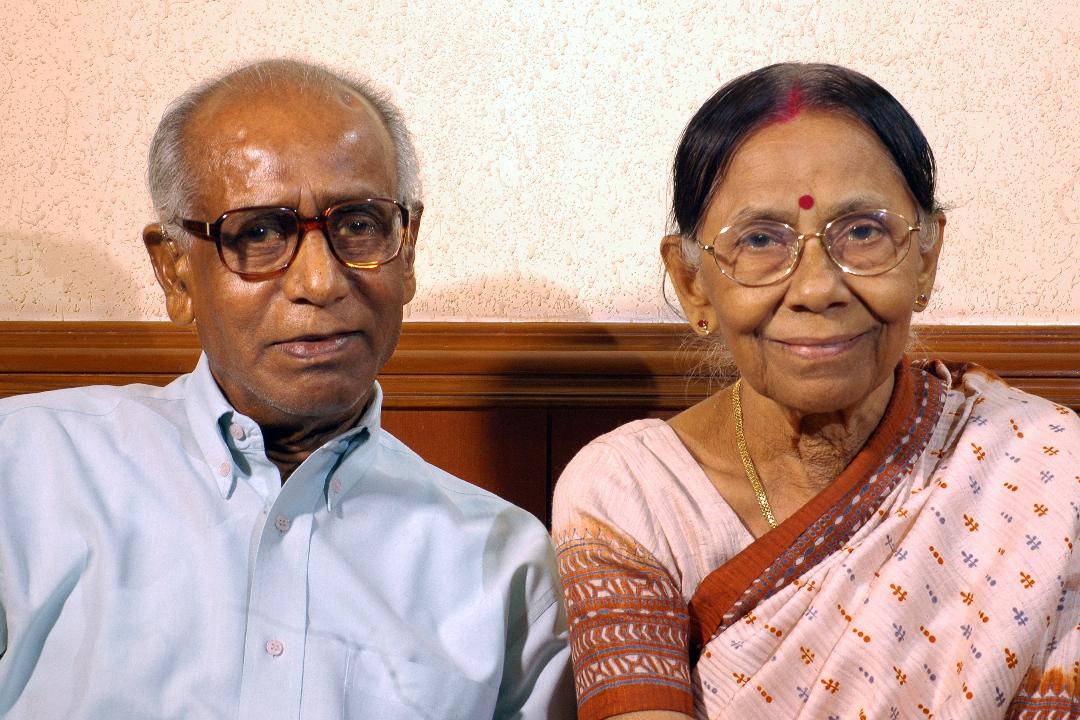
Prof. Chitta Mitra
Creator of Prescribing Behaviour Analysis
Key Achievement
Founder CMarc
Prof. Chitta Mitra
By Sankar Dass
40+ years in pharmaceutical industry | Former Vice President Dr.Reddy’s
Today, every Indian feels a quiet surge of pride when the world says, "India is the Pharmacy of the World."
After spending over 40 years in the pharmaceutical industry, I often pause to reflect on how India earned this place of honour. In my view, three strategically powerful forces helped India stand tall in the global pharma landscape.
The Three Forces:
- The entrepreneurial spirit of the Indian people—resourceful, resilient, and fearless in ambition.
- The visionary legal framework between 1975 and 2000, which encouraged backward integration and made self-reliance in formulation manufacturing possible. Here, the Government acted as a true catalyst.
- And third—and perhaps the least spoken about, yet most profound—the "Go-to-Market" system gifted to the industry by the legendary duo, Prof. Chitta Mitra and Prof. Tarun Gupta.
With his brilliant statistical mind, Prof. Chitta Mitra created a remarkable service for the pharma industry: Prescribing Behaviour Analysis. It was not just another research tool—it was a breakthrough. Unlike conventional market research models, his creation captured the true prescribing behaviour of physicians without asking them a single survey question.
Together with Prof. Tarun Gupta, he showed the industry something invaluable: how doctors actually think, decide, and prescribe.
More importantly, Prof. Mitra taught the pharmaceutical industry how to build brands, not merely sell products.
Today, his creation serves over 100 formulation players in India and neighbouring countries, besides supporting several consultancy firms. Its relevance has only grown with time.
A Personal Turning Point
I had the privilege of knowing Prof. Mitra from 1991, when I was a Brand Manager at Dr. Reddy's. Known for his strong principles and uncompromising views on marketing, my early interactions with him were, honestly, a little stressful.
In one particularly intense discussion in 1992, he was visibly disturbed by how we approached marketing with a pure sales mindset rather than a brand-building lens.
That moment became a turning point for me.
Instead of being critical, I decided to immerse myself in understanding his creation. And that decision changed everything. I was completely mesmerised by the insights that Prescription Data Analysis revealed. As my understanding deepened, my conversations with Prof. Mitra increased—and so did my respect for him as a human being.
I discovered a rare quality in him: he made no distinction between his own sons and a sincere brand marketing professional. Praise or criticism—it was always objective, transparent, and crystal clear. Merit mattered more than relationships.
The industry was truly blessed to have a genius like Prof. Mitra—someone who guided strategy, shaped therapies, and taught marketing teams to speak the language of the common man while engaging with prescribers.
Many organisations climbed the market-share ladder by executing strategy frameworks uniquely designed by Prof. Mitra and his team—frameworks rooted in insight, not instinct.
In the branded generics business, as long as the physician remains the giver of prescriptions, the invisible hands of Prof. Chitta Mitra will continue to guide every prescription written.
He lives on—not just in data, models, or frameworks—but in the hearts of every true pharma brand manager.
Prescriptions Don’t Lie: Why Studying PCPD Is Central to Brand Growth
By Satish Dandekar
In pharmaceutical marketing, we often look for growth answers in medical literature, visual aids, and messaging frameworks. Yet the most honest and unfiltered expression of a doctor’s thinking already exists in front of us – the prescription, which mirrors the mind of the prescriber at the point of offering relief to the patients.
A prescription is not merely a list of medicines. It is the final output of a doctor’s cognitive journey: listening to the patient, interpreting symptoms, forming a clinical judgment, and selecting a therapeutic response. In that sense, prescriptions are the only tangible evidence of the doctor–patient interaction. Designing brand communication without studying them is a strategic blind spot.
Prescription research in India owes much to pioneers such as the Late Prof. Chitta Mitra and the Late Prof. Tarun Gupta, whose timely initiatives since 1977 laid the foundation for modern pharmaceutical marketing through prescription research. Out of several insightful data analytics, Professor Mitra introduced and formalised the concepts of Perceived Condition (PC) and Provisional Diagnosis (PD) –known as PC/PD Profile, which remain central to understanding prescribing behaviour even today.
The first is Perceived Condition (PC) – the patient’s language or the complaints as perceived by the doctor. Such as ‘fever’, ‘throat pain’, ‘burning while passing urine’, ‘heartburn’, ‘blurred vision’ and similar other complaints as the patient narrates to the doctor and expects relief.
The second is Provisional Diagnosis (PD) – the doctor’s interpretation, often formed clinically, without immediate investigations, such as ‘Upper respiratory Tract Infection (URTI)’, ‘Urinary Tract Infection (UTI)’, ‘Acid Peptic Disorder (APD)’, ‘Early Cataract’.
In countries like India, where doctors treat a large number of patients every day, empirical treatment is common and diagnostic tests or investigations are selectively sought. Hence, provisional diagnosis carries enormous weight. What pharma companies call an indication is experienced very differently by different stakeholders. For patients, it is a dis-ease or discomfort. For doctors, it is a diagnosis. For companies, it is an indication with which there offering – The Brand needs to be hooked. These are not interchangeable. Brands that fail to bridge this language gap struggle with recall and relevance in the clinic – reflects perceptual weakness in Rx data analytics.
Doctors recall brands at the moment they mentally label the problem – the PD. The brand that has built a strong and consistent association with any specific PC or PD is the brand that surfaces first in the mind of the doctors at that moment. This principle applies equally to new launches and established molecules. Using doctors’ and patients’ language does not dilute science; it anchors science in real clinical thinking. This is why studying PC/PD Profile matters across the entire life cycle of a brand. For new brands, it enables entry into the doctor’s thinking. For growing brands, it sharpens positioning. For mature brands, it protects recall and habit. PC PD is not stage-dependent; it is decision-dependent.
There is, however, a critical discipline required while studying prescriptions: avoiding what is commonly known as the ‘one doctor syndrome’. One objection, one comment, or one experience is quickly generalised by the marketeer as ‘all doctors think this’. Prescription analysis must therefore be based on patterns across multiple doctors, not isolated anecdotes. The objective is to distinguish aberrations from trends – only then do insights become actionable. Collection and collation of such prescription information is a specialised job, and there are market research organisations that have expertise in this field.
When brand managers systematically study prescriptions (prescription data), they uncover insights that no visual aid or guideline summary can provide. They begin to see:
- Which patient complaints most frequently trigger the molecule and or my brand?
- At what diagnostic label does my brand enter the doctor’s mind?
- Which competing brands are recalled with the same PC PD– and how frequently?
- Which PC PD expressions dominate the doctor’s internal conversation at the point of Brand choice?
At a deeper level, this reveals a powerful truth:
Prescription share reflects mind share, and mind share shapes market share.
This is where the strategic implication becomes clear. Mind is the Market. And PC PD is the key to the doctor’s mind. Brands that fail to own a clear PC PD space are forced to rely on reminders, repetition, or relationships alone. Brands that own it earn recall, relevance, and continuity of conversation.
Brands stagnate not because doctors stop believing in them, but because the brand gradually loses its place in the doctor’s thinking vocabulary. Continuous, meaningful in-clinic conversation is the oxygen of brand growth, and prescriptions tell us where that conversation truly begins.
For a brand manager, studying prescriptions is not an analytical exercise. It is a strategic discipline. Those who master it stop guessing what doctors think. They start knowing. And that changes everything.
A TRIBUTE TO THE FATHER OF DATA-DRIVEN PHARMA MARKETING IN INDIA

By Dr. Sandeep Bhattacharya | MD-Aureax Healthcare
Conventional wisdom often positions marketing as an art rather than a science—an art mastered by a select few who devise creative ideas to persuade customers to purchase goods and services. This perception dominated the minds of leaders in the Indian pharmaceutical industry until the 1980s.
In that transformative decade, two visionary figures emerged: Prof. Chitta Mitra and Prof. Tarun Gupta. Together, they laid the groundwork for translating the intricacies of pharmaceutical business and customer behavior into quantifiable data, converting this data into meaningful insights that encapsulated the essence of data-driven marketing. Their pioneering work sparked a heightened awareness of how available data could be leveraged to understand doctors' behaviors and influence those behaviors towards evidence-based medicine.
However, many players within the industry treated data much like a drunkard clings to a lamppost—not to gain clarity, but for support. Caught in the intoxication of their beliefs about the market, company leaders and marketing teams revelled in their prescription share trends. They felt elated when numbers rose and disheartened when they fell, yet failed to dissect the underlying data to comprehend the various market forces at play. This lack of understanding hindered their ability to shape the market according to their ambitions.
Instead of relying on insight and evidence, they often resorted to transactional relationships—seeking to "buy" market share through persuasion rather than conviction to influence customer behavior. This approach resulted in soaring marketing costs, diminishing margins, and a rapid erosion of credibility regarding the perceived "nexus between the pharmaceutical industry and the medical profession."
Embracing quantitative data is, in fact, straightforward when we grasp how diagnosis, therapy choice, and brand selection guide physician behavior. By adopting accurate segmentation and targeting strategies, one can effectively approach the right doctor with the right message at the right frequency, maximizing our brands' market prescription share. Additionally, targeted patient adherence programs can enhance the lifetime value of our customers.
Ultimately, we must recognize that within the healthcare ecosystem, the only positive contributor is the patient—the individual who makes financial sacrifices to access the goods and services they require. All others take their share from this resource, referring to it in various terms—fees, margins, EBITDA, etc. Ignoring the sole entity that contributes positively will inevitably lead to the decline of that ecosystem, as we have witnessed within our pharmaceutical industry. Over the past five years, the industry's compound annual growth rate (CAGR) has languished at 7-8%, with price increases hovering around 8% and new product introductions providing only 2-3%. This starkly indicates negative volume growth at constant prices in a nation where only 33% of the population has access to medicine. Is it not a lamentable reality for our industry to experience a decline in volume over such a critical period?
In the cherished memory of Prof. Chitta Mitra, let us commit to moving beyond transactional dealings. Let us engage in shaping customer behavior through conviction to accomplish our business goals while ensuring that the entire healthcare ecosystem operates in harmony rather than against us. The pathway is clear, and our collective journey will illuminate the path to success, especially if we heed the milestones placed before us by visionaries like Prof. Mitra.
With the advent of new technologies, such as Artificial Intelligence, we can tailor our offerings to individual customers, fostering meaningful interactions at touchpoints and enhancing patient management to maximize lifetime value. We must remember the enduring lesson from Prof. Mitra: understanding which customer to target, with what message, is pivotal to our success.
The Lasting Impact
Formulation Players
Years of Innovation
Prestigious Institutions
IIM, Harvard, MIT
Lasting Legacy
Photo Gallery